
Why Small Businesses Cannot Afford to Ignore Cybersecurity
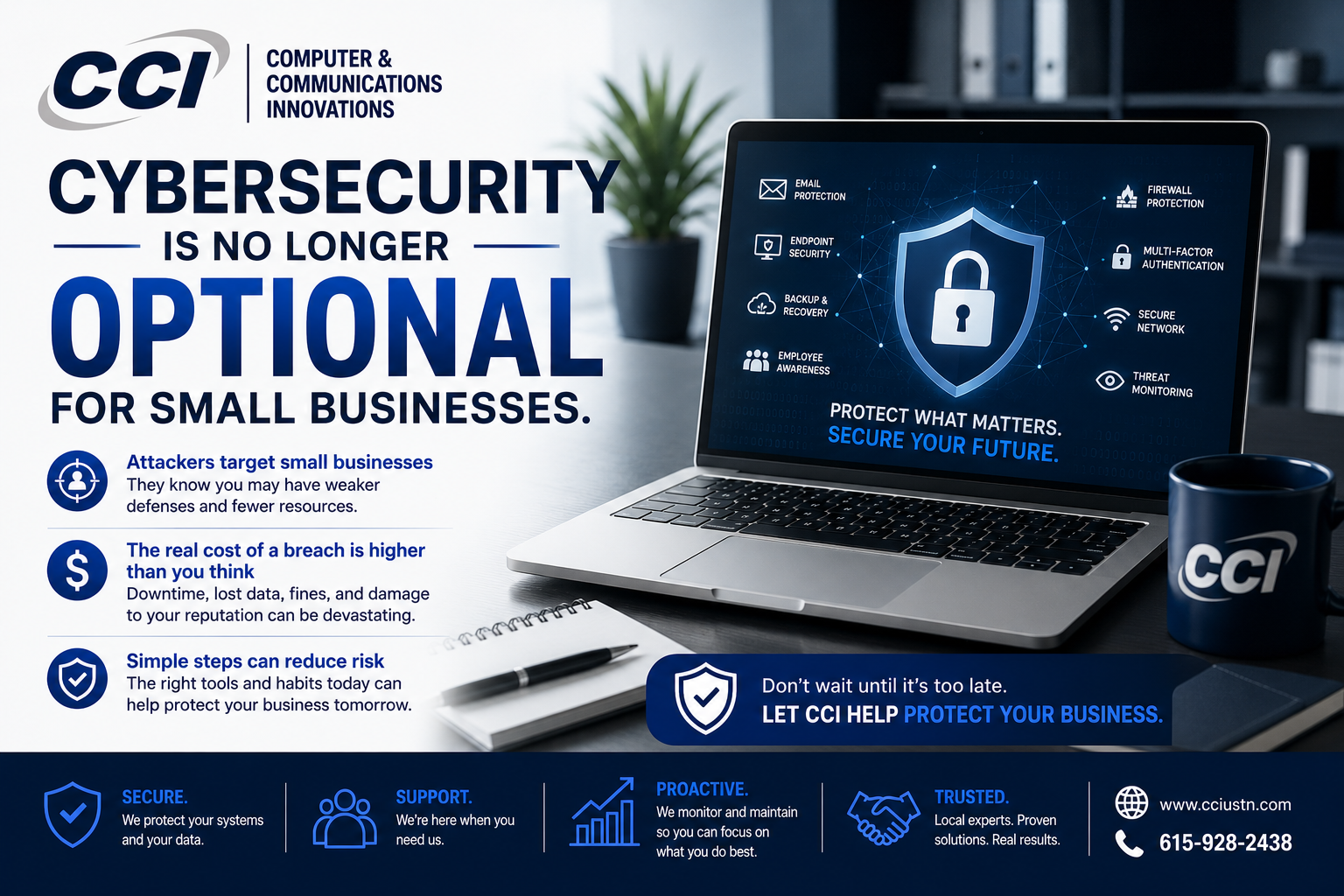
Cybersecurity is one of those things many small businesses push off.
Later in the year.
Later when things slow down.
Later when the budget allows it.
Or worse — after something already goes wrong.
The problem is simple: cybercriminals are not waiting.
Small businesses are often targeted because they typically have fewer protections in place — no dedicated IT team, limited security tools, and inconsistent employee training. Attackers look for the easiest entry point, not the biggest company.
That entry point could be:
A weak password
A fake invoice email
An unpatched computer
A stolen login
Or one accidental click
Cybersecurity is not about fear. It is about preparation.
Why Small Businesses Are Targeted?
Many business owners assume, “We’re too small to matter.”
Unfortunately, most cyberattacks are automated. Criminals use tools that scan the internet for weak systems, outdated software, and exposed accounts. If a vulnerability is found, it gets exploited — regardless of company size.
With over 34 million small businesses in the U.S., many operating without dedicated IT support, attackers know there are plenty of easy targets.
This is why simple, consistent cybersecurity practices matter more than ever.
The Real Cost of a Cyberattack
Cyber incidents are not just IT issues — they are business disruptions.
They can lead to:
Lost revenue
Downtime
Legal exposure
Customer trust issues
Emergency recovery costs
According to IBM’s 2025 report, the average cost of a data breach is $4.4 million globally.
The FBI also reported over $20 billion in cybercrime losses in 2025, showing just how widespread the issue has become.
Even small incidents can be devastating for a small business if systems go down or data is compromised.
Ransomware: A Growing Threat
Ransomware is one of the most damaging cyber threats today.
It works by locking or stealing business data and demanding payment to restore access.
According to Sophos (2025):
Average ransom payment: $1 million
Average recovery cost: $1.5 million
Most common cause: exploited vulnerabilities
63% of victims lacked proper IT skills or resources
Most small businesses are not careless — they are simply busy. Cybersecurity often gets pushed aside until it is too late.
Attackers rely on that.
Phishing: The Easiest Way In
Phishing is when attackers send fake emails or messages designed to trick users into clicking links, sharing passwords, or approving payments.
These messages often look real:
Microsoft alerts
Vendor invoices
Shipping notifications
Password reset requests
Internal company messages
The FBI consistently ranks phishing among the top cybercrime methods reported each year.
Microsoft also reports scanning billions of emails daily for phishing and malware threats — showing just how common these attacks are.
If your business uses email (and most do), phishing is a real and constant risk.
The “It Won’t Happen to Us” Problem
Many businesses only act after something goes wrong.
Backups are checked after data is lost
MFA is enabled after an account is hacked
Updates are installed after a breach
Training happens after a mistake
This reactive approach is expensive and avoidable.
Cybercriminals often target data, money, and access — and small businesses are not excluded.
If your business has email, customer data, financial systems, or cloud storage, it is a target.
What Small Businesses Should Do First
Cybersecurity does not need to be complicated.
Start with the basics:
Turn on multi-factor authentication (MFA)
Keep all systems and software updated
Use strong, unique passwords
Back up important data and test recovery
Train employees to spot suspicious emails
Limit admin access
Remove old user accounts
Use email filtering and endpoint protection
Review Wi-Fi and remote access security
Create a basic incident response plan
These steps significantly reduce risk when done consistently.
Final Thoughts
Cybersecurity is no longer optional for small businesses.
Attacks are common, automated, and increasingly sophisticated. Waiting until something happens is no longer a safe strategy.
The goal is not fear — it is protection.
Start with the basics. Build good habits. Strengthen your systems. And make sure your business is prepared before an incident forces the issue.
If you are unsure where your risks are, Computer & Communication Innovations can help you assess your environment and build a practical cybersecurity plan that fits your business.