
Why Linux Can Be a Smart Money Move for Small Businesses
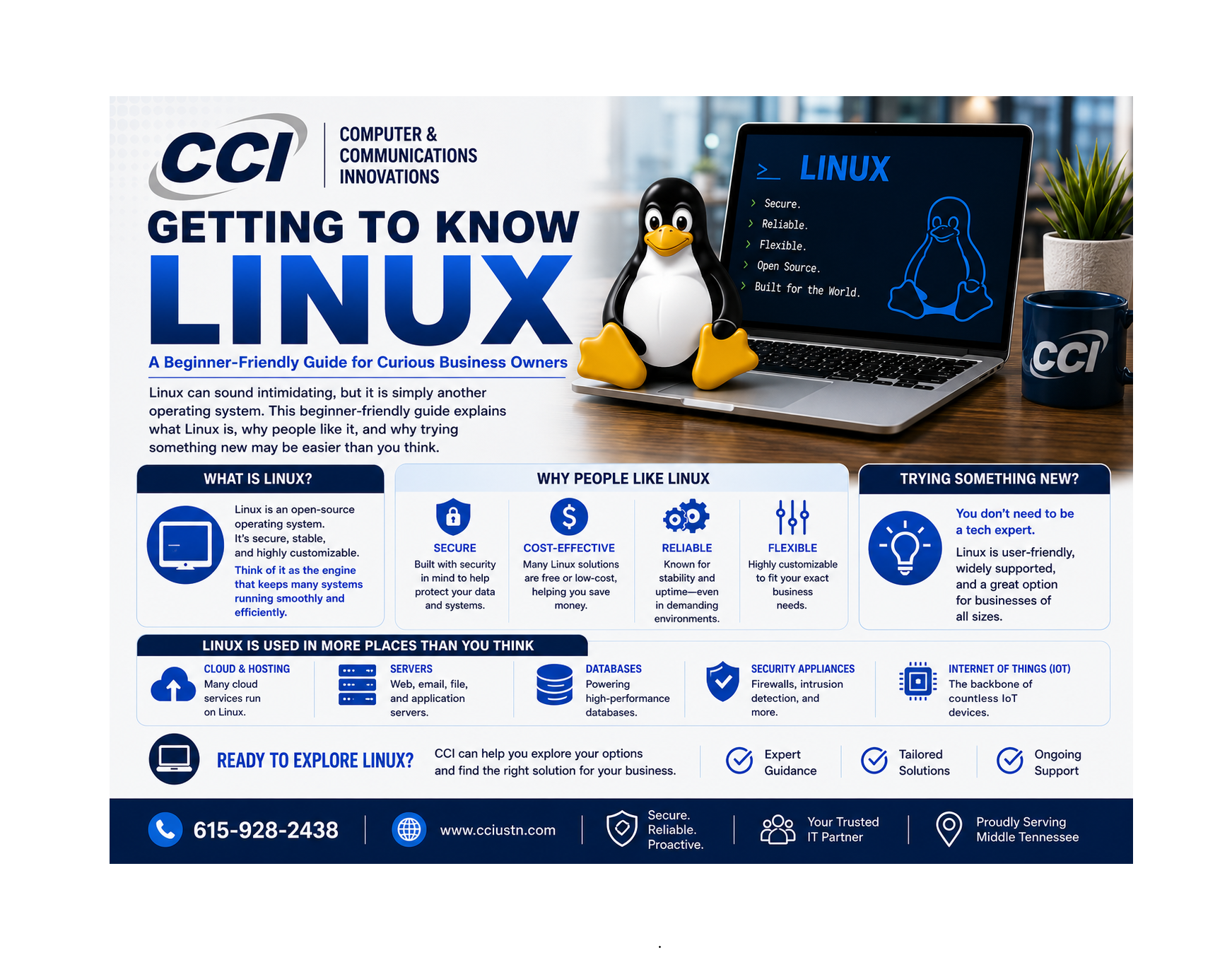
Linux has a reputation for being “for tech people,” but that idea has scared off plenty of people who might actually enjoy using it.
The truth is much simpler.
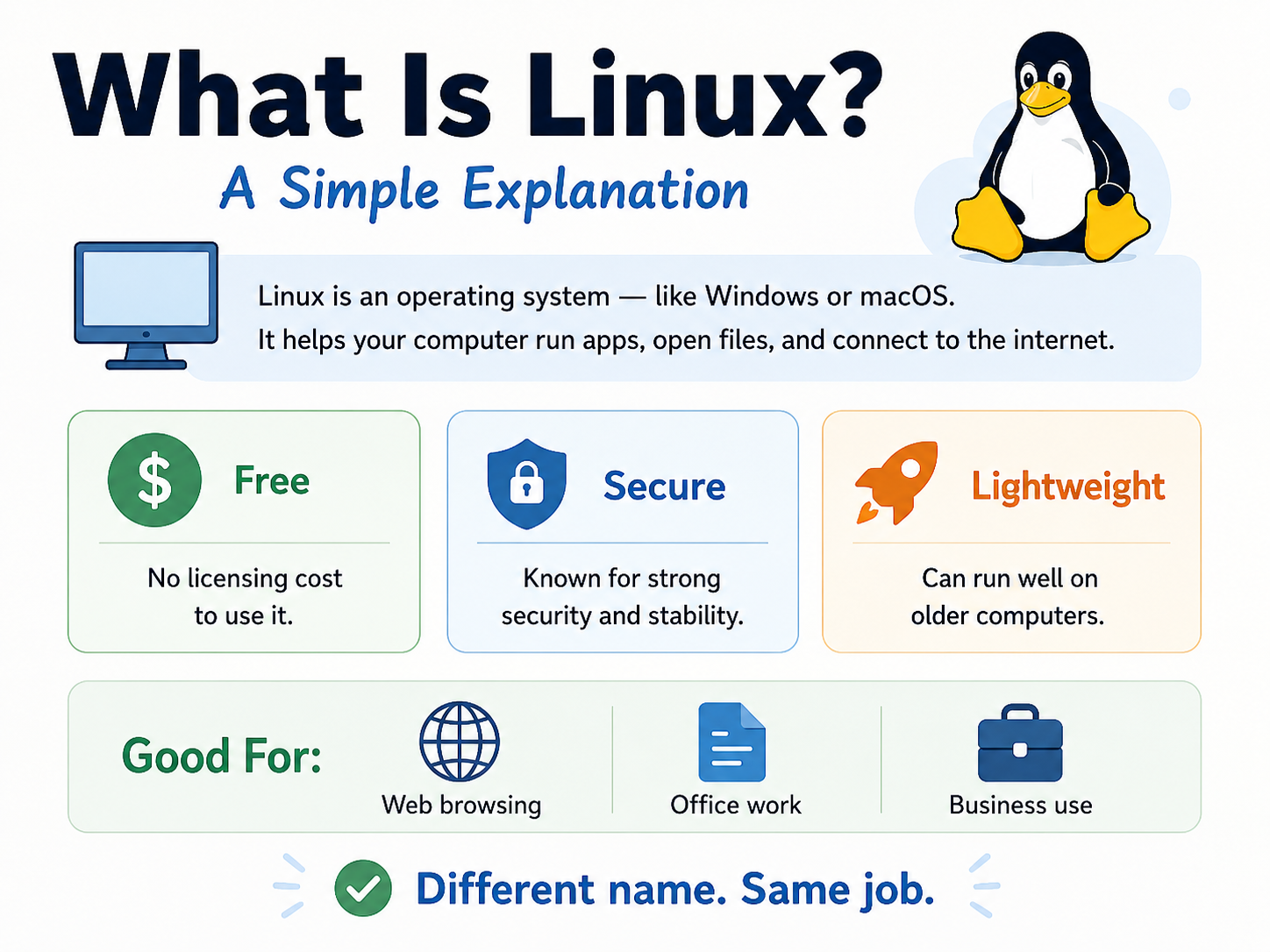
Linux is an operating system, just like Windows or macOS. It is the software that helps your computer run programs, manage files, connect to the internet, and handle everyday work.
So when people say they are “trying Linux,” they are not talking about turning into a programmer overnight. They are talking about using a different operating system that often feels clean, fast, and refreshingly straightforward.
For many people, Linux feels unfamiliar at first mostly because it is not what they have always used. That is normal. New does not always mean difficult. Sometimes it just means different.
One of the biggest reasons people get curious about Linux is freedom. You are not locked into just one experience. There are different versions of Linux, often called distributions, and many of them are built to be friendly for everyday users. That means you can find a setup that feels simple and approachable rather than technical and overwhelming.
Another reason people try Linux is performance. Many users are surprised by how responsive it feels, especially on computers that have started to feel slow under other operating systems. Tasks like browsing the web, checking email, watching videos, working on documents, and handling light office work can feel smooth and efficient.
There is also the cost factor. For individuals and businesses that want to stretch hardware longer or avoid unnecessary software costs, Linux can be worth exploring. It is not about changing everything overnight. It is about asking a practical question:
Another reason people try Linux is performance.
Many users are surprised by how responsive it feels, especially on computers that have started to feel slow under other operating systems.
Could this be a better fit for some of the work we do?
That question matters because not every computer needs the same setup. A front desk machine, a spare office computer, a training device, or a basic admin workstation may not need a heavy and expensive environment. Sometimes a lighter, simpler option makes sense.
The biggest mental hurdle is usually not the software. It is the unknown.
People often worry they will click the wrong thing, get lost, or need special knowledge just to do basic tasks. In reality, many beginner-friendly Linux systems feel surprisingly familiar. You still open apps, browse the web, save files, print documents, and manage your day. The path may look a little different, but the destination is the same.
That is why the smartest way to approach Linux is not with pressure. It is with curiosity.
You do not need to promise a full switch. You do not need to replace every computer in the office. You just need to be open to learning what Linux is, what it is good at, and where it might fit.
For some people, Linux becomes their favorite everyday system. For others, it becomes a helpful tool for specific devices or tasks. Either outcome is a win if you make the choice with clarity instead of fear.
Final Thoughts
Getting to know Linux is really about getting comfortable with the idea that technology does not have to stay the same forever. Sometimes the best move is not doing what you have always done. Sometimes it is exploring a better fit.
If you are curious about Linux and want help figuring out whether it makes sense for your home office or business, learn more at Computer & Communication Innovations.